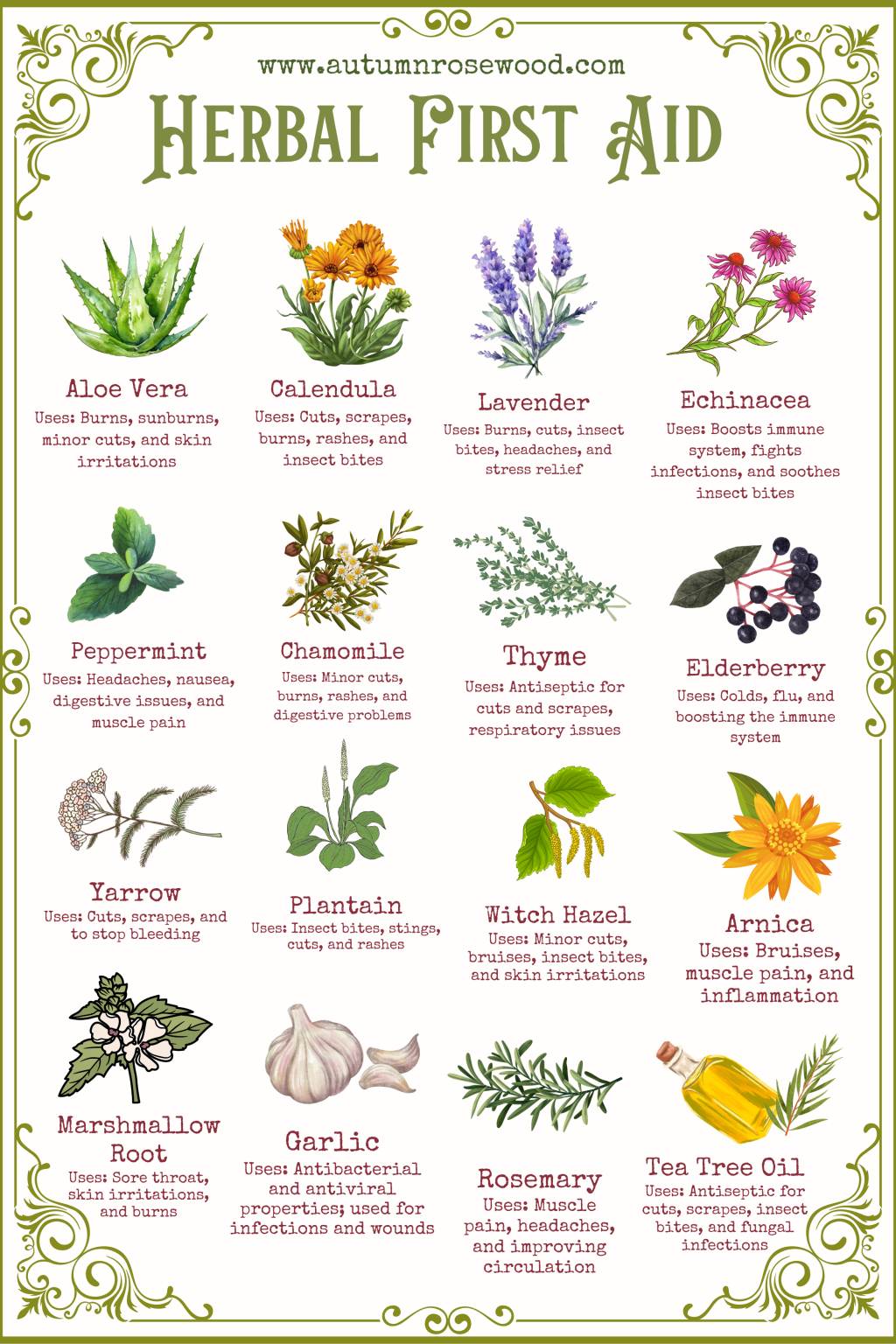
When it comes to gentle, natural care, few things feel more grounding than turning to the plants that have supported wellness for centuries. Whether you’re building your own cottage apothecary or just beginning to explore herbal remedies, having a simple herbal first aid guide on hand is a lovely and empowering way to care for yourself and your loved ones.
This printable brings together some of the most trusted, time-honored herbs for everyday support. Below, I’ll walk you through a few of my favorites, how they can be used, and tips for keeping them in your natural remedy cabinet.
| Top Herbal Allies for Everyday Needs | Other Helpful Herbs to Have On Hand |
|---|---|
| Aloe Vera Soothing and cooling, aloe is best known for treating sunburns, but it also works beautifully on minor cuts, skin irritations, and even razor burns. Keep a fresh plant on your windowsill, or store pure aloe gel in your fridge for extra relief. | Chamomile: For soothing upset tummies and calming the nervous system. Also good for minor burns and skin irritation. |
| Calendula Gentle and powerful, calendula is used for healing cuts, scrapes, and rashes. It has anti-inflammatory and antimicrobial properties, making it ideal for skin salves and healing balms. | Thyme: Antimicrobial and antiseptic—ideal for steam inhalations during colds and for treating cuts. |
| Lavender Beyond its relaxing scent, lavender can be applied topically for minor burns, insect bites, and even headaches (try dabbing diluted oil on your temples). It’s also lovely in compresses or as a calming tea. | Plantain: Often found right outside your door! Great for insect bites, rashes, and minor wounds. |
| Echinacea A well-known immune booster, echinacea is often used at the onset of a cold or infection. It’s available in tinctures, teas, and capsules. I like to keep it on hand in the colder months especially. | Yarrow: Helps stop bleeding and reduce inflammation. You can dry and powder the leaves for use in salves or poultices. |
| Peppermint Known for its ability to ease digestive issues, peppermint is also effective for nausea, tension headaches, and muscle aches. Sip it as a tea or apply diluted peppermint oil to the temples. | Elderberry: An immune booster that helps fight off colds and flu. Often made into syrups and gummies. |
How to Start Building Your Herbal First Aid Kit:
- Create a small shelf or box in your home for dried herbs, essential oils, and salves.
- Include a printout of this chart for easy reference (especially when you’re not feeling well).
- Begin with 3–4 herbs and learn how to use them confidently. Less is more when starting out.
- Always check for allergies or contraindications, especially if you’re pregnant or taking medications.
Herbal first aid doesn’t have to be intimidating, it can be as simple as steeping a cup of thyme tea for a cough, or reaching for a calendula salve when your child scrapes a knee.
Let this guide be a gentle companion as you continue creating a home that feels connected, mindful, and rooted in nature.

 Autumn Rosewood

Leave a comment