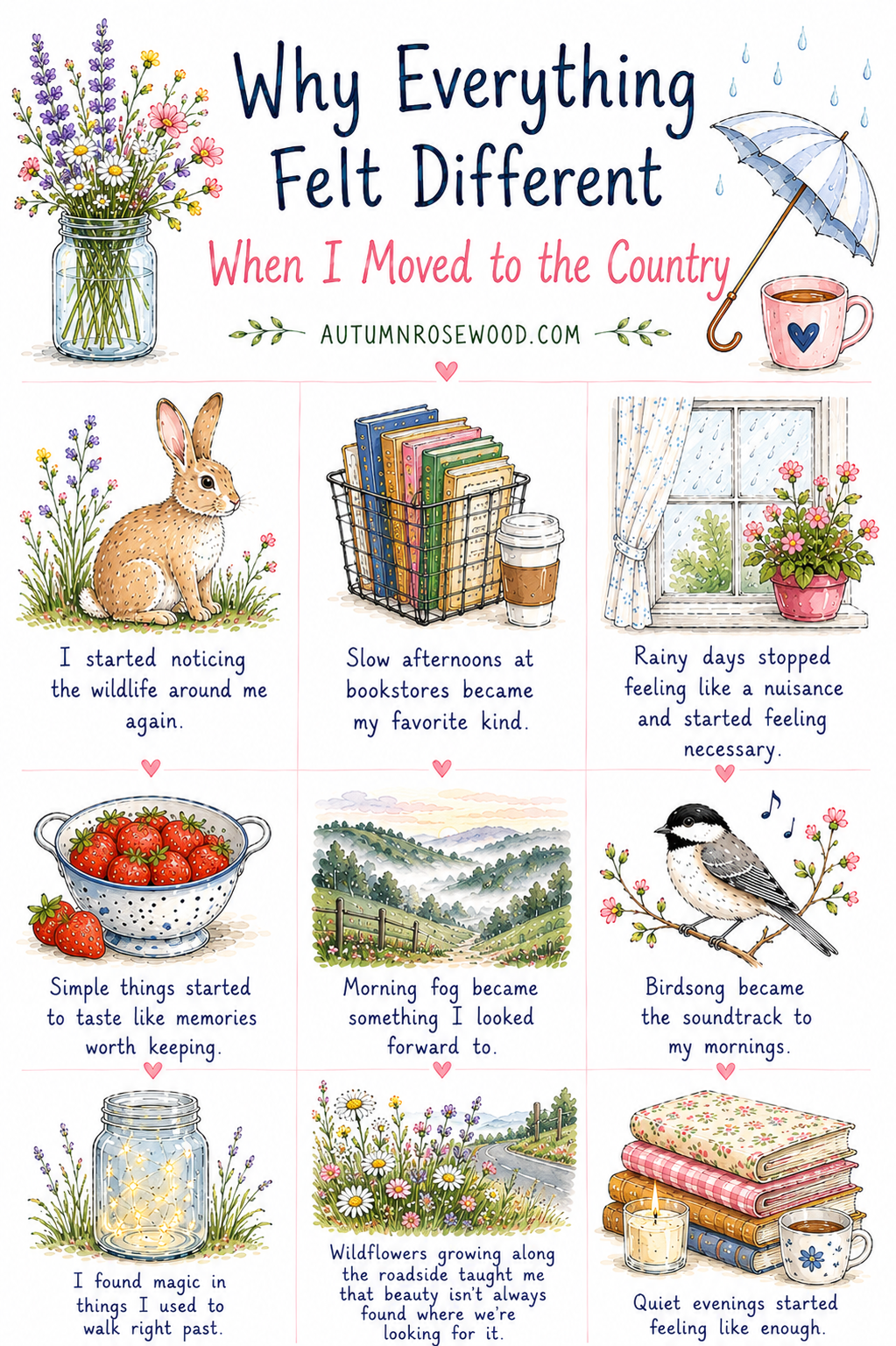
One of the strangest things happened when I moved to the country. I became fascinated by things I had never paid much attention to before.
I found myself stopping to watch a rabbit cross a field. I noticed the way morning fog settled over the hills and I could spend several minutes studying a wildflower growing in a ditch or watching the wind move through a stand of trees.
At first, I assumed I had simply moved somewhere prettier. But the longer I’ve thought about it, the less convinced I am that beauty alone explains it. I think what changed was my attention.
Most of us spend our days in environments specifically designed to capture it. Every notification, advertisement, headline, and screen is competing for a place in our minds. We move through a world that constantly interrupts us. Even when we’re resting, we’re often consuming something, scrolling through something, responding to something, or thinking about the next thing we need to do.
We have become so accustomed to this that we rarely stop to question whether it feels natural. Yet human beings spent thousands of years living very differently. For most of our history, our attention wasn’t directed toward glowing screens, and endless streams of information. It was directed toward weather patterns, changing seasons, animal tracks, edible plants, approaching storms, and the landscape itself.
The modern world is often treated as the default setting for human life when in reality, it is the newest chapter in a very old story. Sometimes I wonder if that’s why so many people feel mentally exhausted even when they aren’t physically tired. Perhaps our minds are doing exactly what they were designed to do. The problem may be that they are being asked to do it in environments that overwhelm them.
When I moved to the country, I didn’t become a different person or suddenly develop a deeper appreciation for beauty. I simply found myself in a place that demanded less from my attention. Without realizing it, I had more room to observe. More room to wonder, room to become interested in things that had no practical purpose.
As adults, we often justify our attention by asking what something is for. What will I gain from this? Will it save time? Make money? Improve my life? Help me reach a goal? But fascination doesn’t work that way.
A rabbit crossing a field serves no purpose. Neither does watching clouds drift across the sky or noticing the first fireflies of summer. Yet those moments often leave us feeling more refreshed than activities we consider productive. I don’t think that’s an accident.
I think human beings need experiences that are not transactional. We need moments that exist for no reason other than the experience of noticing them.
Perhaps that is why so many people feel unexpectedly better after a walk, an afternoon in the garden, or an hour spent sitting beside a lake. We often describe these activities as an escape from real life but what if they aren’t an escape at all?
What if they are a brief return to a way of paying attention that is much older than the world we’ve built around ourselves? The older I get, the less I believe that wonder is something we find.
I think wonder is what remains when enough distractions are removed. The world has always been interesting.
The question is whether we’ve left ourselves enough room to notice.
Autumn


Leave a Reply